The Content Ladder: Replies → Posts → Long-Form
The Content Ladder: Replies → Posts → Long-Form
The best content systems don't start from scratch. They test ideas at low-stakes levels and elevate winners. This is the content ladder: replies become posts, posts become threads, threads become long-form assets.
Each rung validates the idea before you invest more effort. No more wasting hours on content nobody wants.
How the Ladder Works
Think of content creation as a progression:
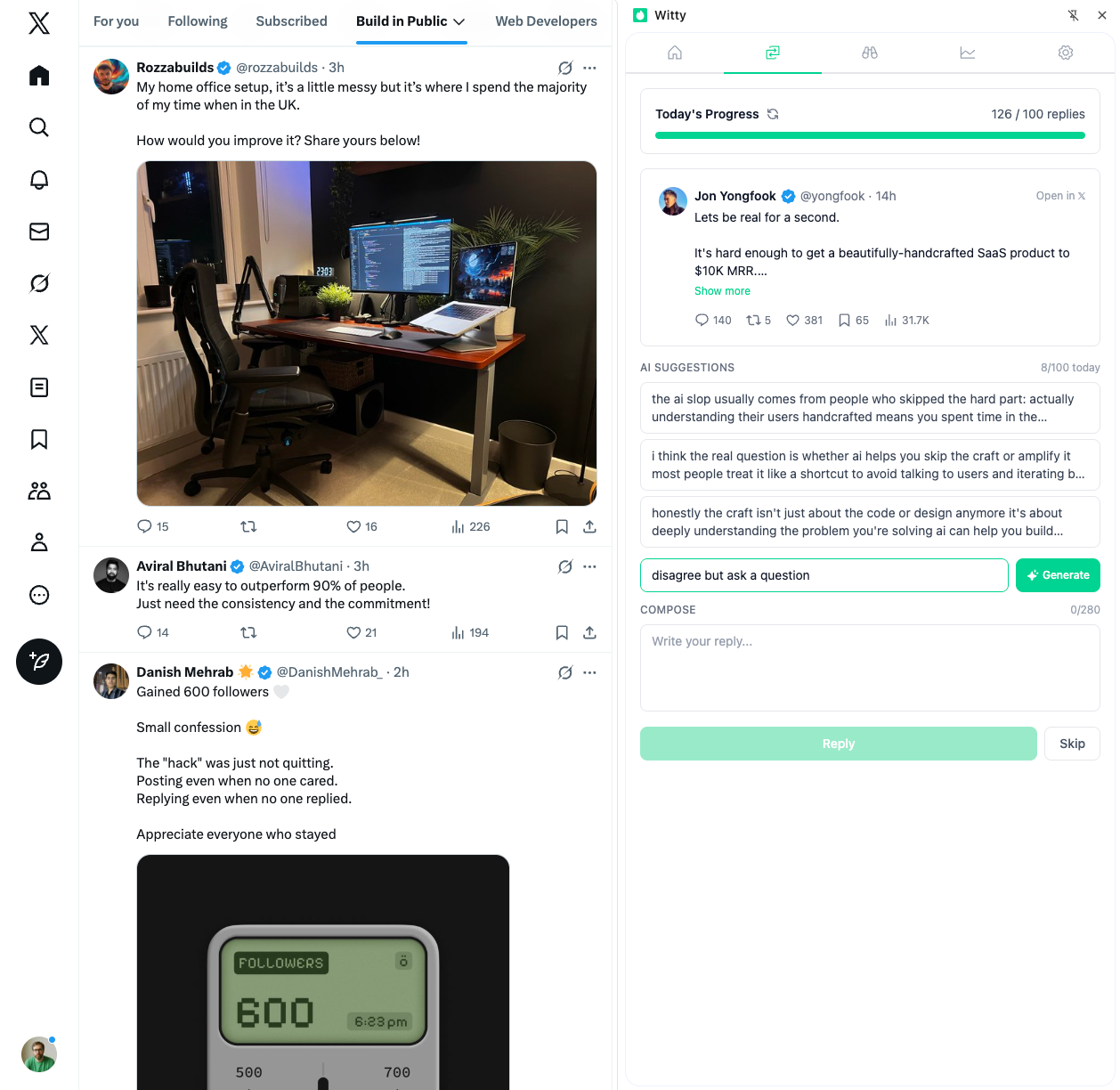
Level 1 - Replies: Low effort, immediate feedback. You test insights in someone else's thread.
Level 2 - Posts: Medium effort. Winners from replies become standalone content for your feed.
Level 3 - Threads: High effort. Your best-performing posts get expanded into comprehensive deep dives.
Level 4 - Long-form: Highest effort. Your most successful threads become newsletters, blog posts, or guides.
At each level, you're building on proven success. The ideas that reach the top have been validated multiple times.
Level 1: Replies as Your Testing Ground
Your replies are a content laboratory. You share ideas with minimal investment and get immediate feedback.
Starting here makes sense because replies have the lowest time investment per idea, provide real-time audience response, offer a relationship-building bonus, and allow risk-free experimentation.
Track what resonates. A reply that gets 20+ likes and generates conversation has legs. Save it. A reply that falls flat? You spent two minutes finding out instead of two hours. Learn more about writing high-value replies. As daily practice, write 10 to 15 replies, notice which ones resonate, and screenshot or save the ones that hit. You're building a bank of validated ideas.
Level 2: Elevating to Posts
When a reply performs well, it's ready for the spotlight. But you can't just copy-paste,replies live in context. Posts must stand alone.
The transformation process involves extracting the core insight from your reply, adding a hook that works in the feed (not in a thread), expanding with context, examples, or additional points, and making it self-contained.
Example transformation:
Reply: "The biggest mistake I see is people replying to huge accounts exclusively. The 10K-100K accounts are where the magic happens."
Post: "Stop replying only to accounts with 500K followers.
They won't notice you.
Focus on the 10K-100K range instead: • Big enough for meaningful reach • Small enough to actually see your reply • More engaged communities • Real relationships can form
The 'big account' strategy is a trap. The mid-tier is where growth happens."
Same insight. Different presentation for a different context.
Level 3: Building Threads
Posts that perform above average are candidates for expansion. Not every post should become a thread,only the ones with depth to explore.
Expand when post engagement significantly exceeded average, when comments asked for more detail, when the topic has multiple components worth exploring, and when you have genuine depth to add (not just padding).
Thread structure:
Tweet 1 (Hook): The insight that worked, refined and strengthened
Tweets 2-7 (Body): Each sub-point expanded with examples, evidence, and specifics
Tweet 8 (Conclusion): Summary and optional call to engage
The quality bar: Every tweet in your thread should earn its place. If a tweet is filler, cut it. A tight 6-tweet thread beats a padded 12-tweet thread. For more on effective thread structure, see thread strategy.
Level 4: Creating Long-Form Assets
Your best threads become lasting resources: newsletter articles, blog posts, PDFs, or videos.
Go long-form when the thread was a top performer, when the topic has even more depth to explore, when there's strategic value (SEO, lead magnet, email opt-in), or when your audience explicitly requested an expanded version.
The transformation process starts with your thread as an outline. Expand each tweet into paragraphs with full explanation, add research, sources, and additional examples, include case studies or deeper analysis, create proper introduction and conclusion, and format for the chosen medium.
What was 8 tweets becomes 2,000+ words. The core ideas were already validated — now you're creating a definitive resource. This is the essence of content repurposing.
The Weekly Workflow
Put the ladder into practice:
Daily: Write 10+ replies. Note which resonate. Save promising ones.
Twice weekly: Review saved replies. Transform your best 2-3 into standalone posts.
Weekly: Review post performance. Identify one thread candidate. Create and schedule.
Monthly: Review thread performance. Select your best for long-form expansion.
This rhythm ensures ideas are constantly flowing up the ladder while you're continuously testing new ones at the bottom.
The Time Investment
| Level | Time Per Piece | Frequency | Weekly Total |
|---|---|---|---|
| Replies | 2-5 minutes each | 10/day | ~3-4 hours |
| Posts | 10-15 minutes | 3/week | ~45 minutes |
| Threads | 45-60 minutes | 1/week | ~1 hour |
| Long-form | 2-4 hours | 2/month | ~1 hour/week |
Total: 6-7 hours per week for a complete content system.
Most of that time is replies, which serve double duty,they test ideas AND build relationships.
Why This System Works
The system provides idea validation because you never invest heavily in an unproven concept. Bad ideas die early with minimal loss. It reduces anxiety because you never start from zero. Posts come from replies, threads come from posts, and there's always source material. It ensures audience alignment because the ideas that rise are ones your audience actually responded to, not just ones you thought were good. And it delivers compounding returns because each piece builds on previous work. A reply idea might eventually become a defining article you're known for.
Common Mistakes
Skipping levels means going straight to threads without testing the idea first. Sometimes this works, but often you've just wasted an hour on a concept that falls flat. Elevating everything is a trap because not every reply should become a post and not every post should become a thread. Only elevate standouts and be ruthless about selection.
Never elevating is the opposite problem. If you have great replies sitting in your screenshots folder unused, you're leaving value on the table. Forcing expansion means making every post a thread when some ideas are complete at post length. Respect content that doesn't need expansion. Not tracking undermines the whole system. Without notes on what performed, you can't systematically elevate. Simple tracking transforms random wins into repeatable systems.
Getting Started
In week 1, focus on replies, track which ones resonate, and start your "elevate" list. In week 2, continue replies, transform your best 3 into posts, and note performance. In week 3, continue the system and create your first thread from your best post. In week 4, the full system is running. Review what's working and identify a long-form candidate.
By month's end, you have a content machine that tests ideas continuously, elevates winners systematically, and builds lasting assets from your best thinking.
Your audience is telling you what they want. The ladder helps you listen and respond with increasingly valuable content. This systematic approach supports your content pillars by ensuring each pillar gets content at every level of depth.
Related Articles

The Difference Between Engagement and Attention
50,000 impressions. Great. Did anyone care? Attention and engagement are fundamentally different. Conflating them leads to poor strategy choices. You'd rather have 1,000 impressions with 5% engagement than 50,000 with 0.1%. The first builds an audience. The second just creates noise.
7 min read
How to Build a Reply Portfolio
Your posts reach your followers. Your replies reach everyone else. A reply portfolio is your collection of high-value replies that demonstrate expertise, attract profile visits, and build relationships. Every reply is an audition. People who see it are evaluating whether you're worth following.
7 min read
How to Build Authority on X Without a Big Launch
The 'overnight success' you see is usually the visible peak of years of invisible work. Big launches are high-risk, one-time events that often underdeliver. Steady presence is low-risk, compounding, and available to everyone. You don't need a breakthrough moment to build genuine authority.
8 min readYou've done the learning. Now put it into action.
Witty finds tweets worth replying to and helps you craft responses in seconds. Grow your audience without the grind.
No credit card required.