Building an Intelligence System for X
Building an Intelligence System for X
Scrolling your feed is passive. You see what the algorithm shows you, engage with what surfaces, and miss what doesn't appear. This approach works at small scales but becomes inefficient as your strategic needs grow.
An intelligence system inverts this dynamic. Instead of you searching for content, the content comes to you, filtered and organised according to your priorities.
What an Intelligence System Does
At its core, an intelligence system answers three questions automatically:
What are the people I care about posting? Rather than manually checking accounts, you see their content aggregated and prioritised.
What conversations are happening in my space? Trending topics, emerging debates, and viral content in your niche surface without hunting.
What opportunities exist right now? Fresh posts from target accounts, questions you can answer, threads worth joining, all visible at a glance.
Building this system requires combining native 𝕏 features and deliberate workflows. The right tools can help, but the system matters more than any particular software.
The Foundation: Strategic Lists
X lists are the core infrastructure. Most people use lists casually if at all. Power users treat them as curated feeds that bypass the algorithm entirely.
Build lists with specific purposes. Your high-priority list should contain the 20-30 accounts you most want to engage with, and you should check it daily for fresh engagement opportunities. This is where spotting tweets worth replying to becomes systematic. A peer network list captures accounts at your level growing alongside you, surfacing mutual support and collaboration opportunities. An industry news list tracks accounts that break news or analyse trends in your space, useful for timely reaction opportunities. If you're building a business, a prospects and customers list helps you track what potential customers discuss, revealing content angles and outreach opportunities. Finally, a competitors list (kept private) helps you understand what others in your space post so you can differentiate and identify gaps. Each list serves a function. Check them in priority order during your engagement sessions.
Notification Architecture
Turn on notifications for a small number of accounts, typically 15-25 maximum. These should be your highest-value engagement targets, accounts where early replies to their posts generate meaningful visibility.
Too many notifications create noise. Too few mean missing opportunities. The right number depends on your capacity and the posting frequency of your targets.
Consider turning off other notifications during focused work. The goal is intentional attention, not constant interruption.
Search as Surveillance
Advanced search becomes a discovery tool when used systematically. Saved searches for your key topics, run daily, surface conversations you might otherwise miss.
Useful search operators:
"your topic" ? finds questions about your topic
"your topic" min_faves:10 finds posts with proven engagement
"your topic" -filter:links removes promotional posts
from:username "keyword" tracks what specific accounts say about topics
Create a rotating set of searches you run regularly. The combination of topic keywords, question marks, and engagement thresholds surfaces high-potential content.
Monitoring Tools
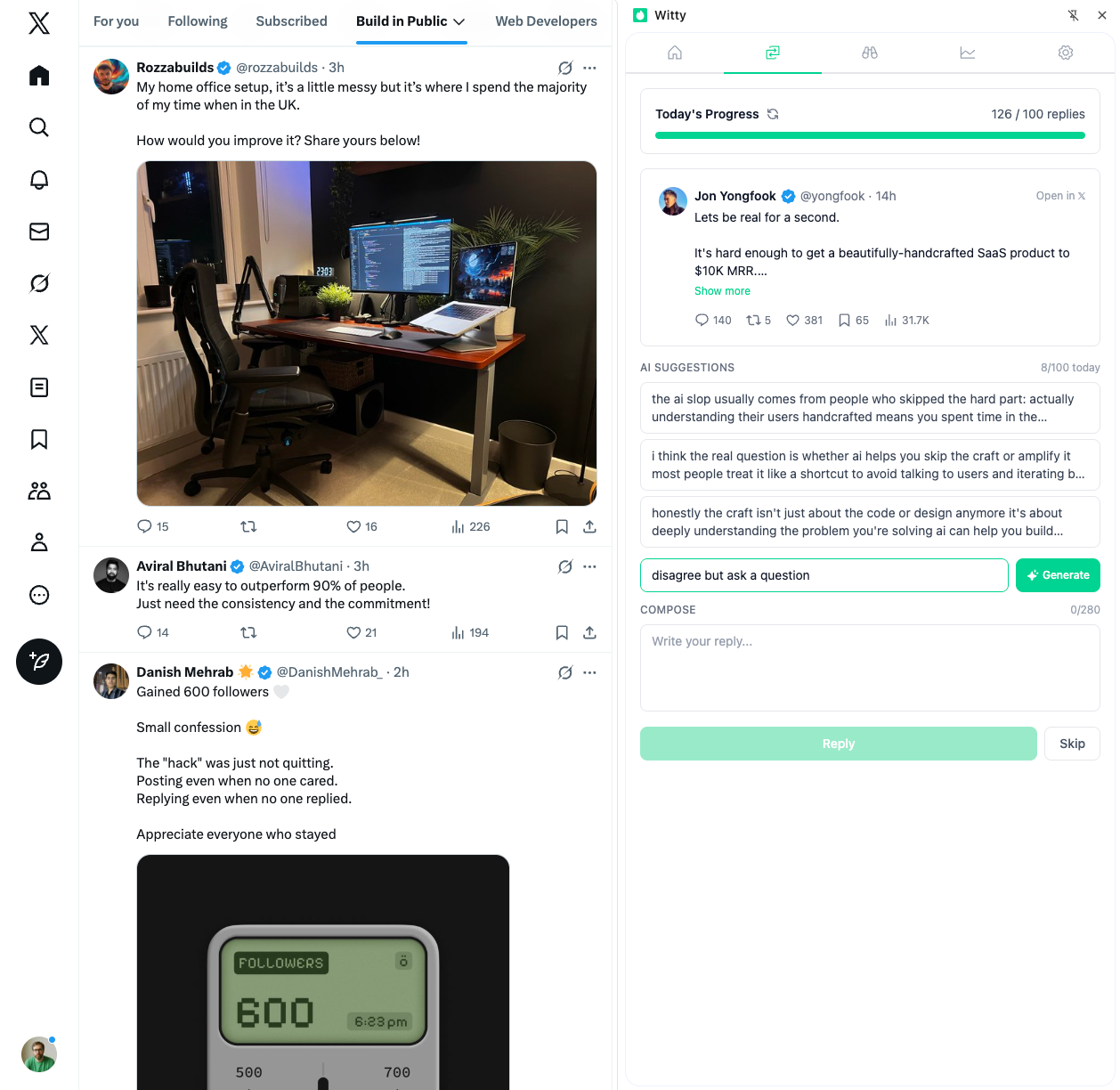
The right tools extend what's possible with native 𝕏 features. The Witty Chrome extension offers an enhanced discover tab that helps surface posts worth engaging with, along with AI insights that can identify patterns and opportunities you might miss manually. Its reply queue feature also helps you engage systematically without hitting rate limits.
Beyond discovery, consider how you'll track what you find. Bookmarks work for temporary storage, but a notes document or dedicated system works better for longer-term reference. The specific tools matter less than having a consistent workflow you'll actually use.
The Daily Intelligence Routine
Structure beats ad-hoc checking. A typical intelligence routine spreads thirty minutes across three sessions. In the morning, spend ten minutes scanning your high-priority list for overnight posts, checking notifications for responses requiring reply, and doing a quick sweep of saved searches for time-sensitive opportunities. At midday, take another ten minutes for a second pass through priority lists, engaging with morning content that's building momentum and checking your industry news list for timely topics. In the evening, use your final ten minutes for a last engagement pass, responding to threads from your own content and planning the next day's content based on what you've observed. Thirty minutes total, spread across the day, maintains presence without consuming hours. This forms the core of a daily engagement system.
Tracking and Recording
The most valuable opportunities often appear once. Systems for capturing and organising help you act on them.
When you see content worth engaging with later, save it. Bookmarks work for temporary storage. A dedicated notes document works for longer-term reference. Tools like Witty can help here too, with AI-powered post analysis that helps you understand why certain content performs well.
Track which accounts and topics consistently generate good engagement for you. This data refines your intelligence priorities over time.
Document patterns you notice. Which topics are trending in your space? Which accounts are rising? What debates are emerging? This intelligence informs your content strategy.
Automation Boundaries
Automation should amplify your judgment, not replace it. Scheduling posts for optimal times is useful automation. Auto-replying based on keywords produces spam.
The goal is reducing friction and surfacing information, not removing human decision-making from engagement. Authentic connection requires actual attention.
Evolving the System
Your intelligence needs change as your account grows. The targets that mattered at 1K followers differ from those at 10K. The topics worth tracking shift as your expertise and interests develop.
Review your system quarterly. Are your lists still serving their purpose? Are your saved searches surfacing valuable content? Are your tools worth their cost or complexity?
Simplify where possible. The most sophisticated system is useless if it's too complex to maintain. A simple system you actually use beats an elaborate system you abandon.
The Compound Effect
Good intelligence compounds. Early awareness of emerging conversations leads to high-visibility replies. Understanding what your audience cares about improves content relevance. Knowing what competitors do helps you differentiate.
Over time, your intelligence system becomes a competitive advantage. While others scroll passively, you engage strategically. The efficiency gap widens as your systems improve and your pattern recognition sharpens.
Build the infrastructure once. Refine it continuously. Let it work for you. This system complements your reply portfolio strategy by ensuring you never miss opportunities.
Related Articles

Turning X into a Learning Engine (Not a Doomscroll Machine)
64% of Americans describe themselves as doomscrollers. But X can be one of the most powerful learning tools available. The difference between a time sink and a learning engine isn't the platform. It's how you use it.
8 min read
How to Build a Reply Portfolio
Your posts reach your followers. Your replies reach everyone else. A reply portfolio is your collection of high-value replies that demonstrate expertise, attract profile visits, and build relationships. Every reply is an audition. People who see it are evaluating whether you're worth following.
7 min read
How to Build an Audience on X While Building a Product
The common approach: spend 6+ months building in silence, launch to crickets, scramble to build audience while burning runway. The better approach: audience grows while product develops, launch to engaged community waiting for you. Founders who build in public report 3-5x higher launch engagement.
9 min readYou've done the learning. Now put it into action.
Witty finds tweets worth replying to and helps you craft responses in seconds. Grow your audience without the grind.
No credit card required.