What to Do When Your Impressions Drop
What to Do When Your Impressions Drop
You check your analytics and your heart sinks. Impressions are down 40% from last week. Posts that used to get thousands of views are struggling to crack hundreds.
First: don't panic. Impression drops happen to everyone, often for reasons completely outside your control. Second: don't immediately overhaul your strategy. That's usually the wrong move.
Here's how to diagnose what's happening and what to actually do about it.
Understanding Impression Variability
Before assuming something's broken, understand what's normal.
Impressions naturally vary by 20-50% day-to-day due to timing of posts relative to follower activity, trending topics that steal attention, algorithm updates and testing, platform-wide usage fluctuations, and holiday and seasonal patterns.
A single bad day, or even a bad week, doesn't necessarily signal a problem. You're looking for sustained trends across 2-4 weeks before diagnosing issues.
The Diagnostic Framework
When impressions drop significantly, work through these potential causes in order:
1. External Factors (Not Your Fault)
Algorithm changes happen regularly as 𝕏 adjusts its systems. Sometimes entire categories of content get deprioritized. If everyone in your niche is complaining about reach, it's probably not you. Platform issues and occasional bugs affect visibility; check 𝕏's status page and search for reports of widespread problems. Major events like breaking news, sports events, or cultural moments absorb platform attention. Your content isn't underperforming; it's competing against extraordinary circumstances. Seasonal patterns matter too, as engagement typically drops during holidays and summer months. If you're comparing December to October, that's apples to oranges.
2. Posting Behavior Changes
Frequency shifts matter. Did you post less recently? Even small frequency drops affect algorithmic distribution because the algorithm favors consistent accounts. Timing changes also matter. Are you posting at different times? Even 1-2 hour shifts can dramatically affect reach. Check if your posting schedule changed. Format changes play a role too. Did you switch from images to text-only? Change your thread style? Format matters more than most realize.
3. Content Quality Signals
Hook effectiveness determines initial distribution. Are your opening lines compelling? The algorithm tests posts with small audiences first, and if early engagement is low, distribution stops. Engagement signals matter deeply. Are replies and conversations happening? The algorithm heavily weights conversation depth over passive likes. Relevance drift can confuse distribution. Have you strayed from your core topics? The algorithm may be uncertain about who to show your content to.
4. Account Health Issues
Rate limit triggers include heavy automation, aggressive following/unfollowing, or excessive posting, all of which can trigger soft limits that reduce visibility. Spam flags can result from repeated content, excessive hashtags, or link patterns, flagging your account for reduced distribution. Report accumulation affects reach; if your content receives reports, even unfounded ones, it can reduce your visibility.
What to Do: The Response Playbook
If External Factors Are the Cause
Action: Wait it out.
Don't change your strategy based on temporary conditions. Give it 2-4 weeks. Continue posting quality content consistently. The algorithm will normalize.
Avoid common mistakes: don't dramatically increase posting frequency, don't start using engagement bait, don't radically change your content style, and don't buy engagement or followers.
If Your Behavior Changed
Action: Return to baseline.
Look at your last strong period. What were you doing differently? Post at your historically best times. Return to your typical frequency. Use formats that worked before. Document what you find. This becomes your playbook for future dips.
If Content Quality Dropped
Action: Audit and adjust.
Review your last 10 posts against your top performers from the past month. Are hooks as compelling? Are you providing the same level of value? Are you inviting the same level of conversation?
Common quality issues include getting lazy with opening lines, posting observations instead of insights, forgetting calls to engagement, and becoming too predictable.
If Account Health Is Compromised
Action: Reset your patterns.
Reduce posting frequency for a few days. Stop all automated activity. Ensure you're not reposting identical content. Remove any questionable links from recent posts. Be extra genuine in engagement. Account health issues typically resolve within 1-2 weeks of clean behavior.
The Engagement-First Recovery
Regardless of the cause, one strategy consistently helps: prioritize engagement over posting.
When impressions drop, most people respond by posting MORE. This often backfires,you're creating more content that also underperforms, signaling to the algorithm that your account is declining.
Instead:
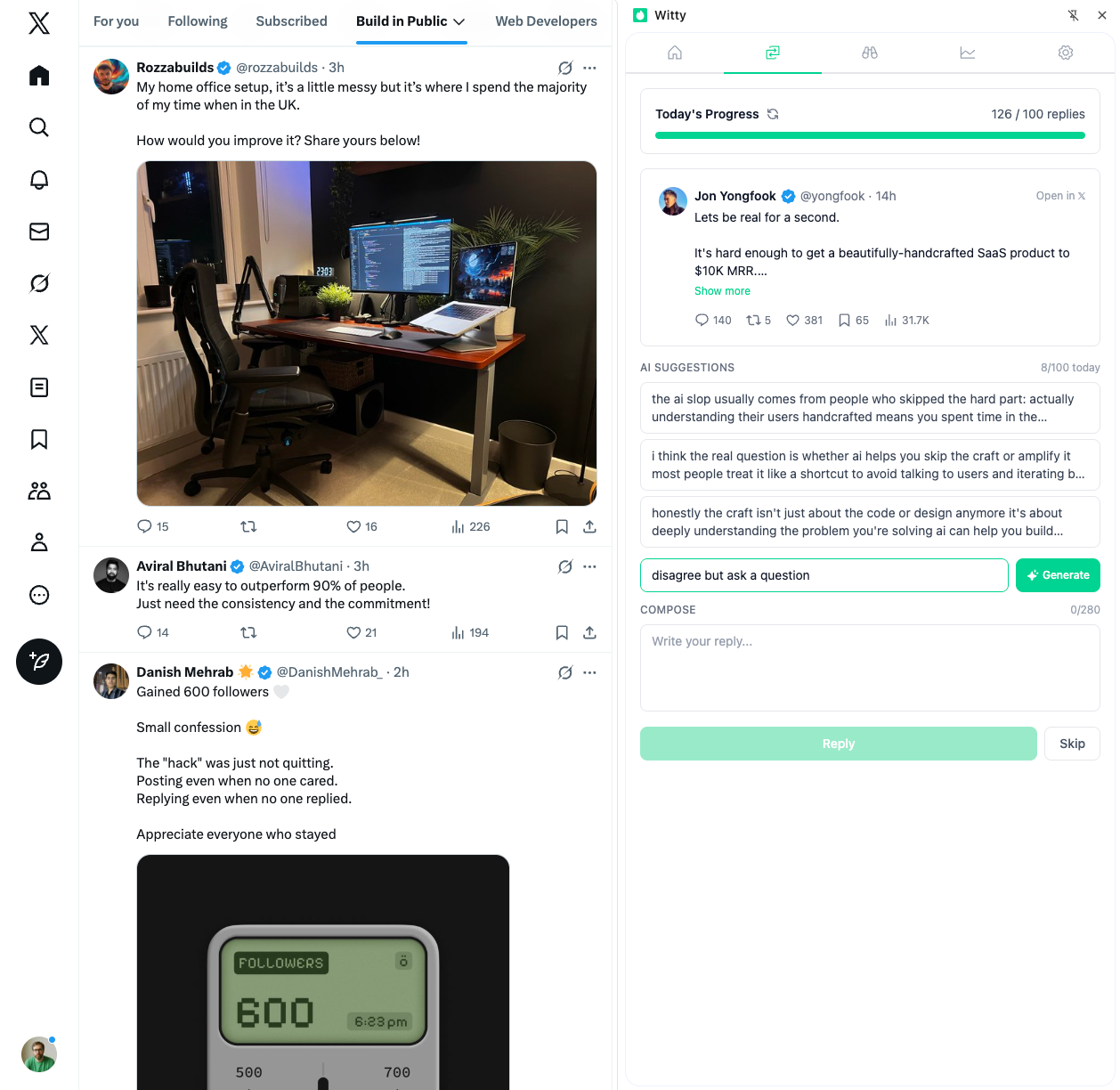
Spend 70% of your X time on replies for 1-2 weeks.
Reply to accounts you haven't engaged with recently. Join conversations in your niche. Be helpful and thoughtful.
This accomplishes several things. It reminds the algorithm of your active presence, gets your name in front of audiences again, rebuilds relationship signals, and takes pressure off your original content. Your impressions will start recovering as you rebuild visibility through engagement.
When to Actually Worry
Be concerned if impressions dropped 50% or more and haven't recovered after 4 weeks, if engagement rate dropped alongside impressions (not just impressions alone), if you're consistently underperforming your historical baseline, or if other accounts in your niche are not experiencing similar drops. These patterns suggest a deeper issue worth investigating, potentially account restrictions or fundamental content-audience misalignment.
Tracking for Prevention
Build a simple dashboard to catch drops early:
Track weekly metrics including average impressions per post, engagement rate, profile visits, and best and worst performing days. Build this into your weekly review ritual.
Watch for warning patterns: two consecutive weeks of declining impressions, engagement rate dropping faster than impressions, or profile visits declining while other metrics stay stable. Early detection lets you course-correct before small dips become major declines.
The Mindset Shift
Every account experiences impression fluctuations. The difference between accounts that recover quickly and those that spiral:
Accounts that recover stay calm and diagnostic, maintain consistency, focus on engagement, and trust their proven content. Accounts that spiral panic and change everything, post desperately, chase viral tactics, and abandon what worked.
Impression drops are feedback, not failure. Use them to refine, not to rebuild from scratch.
The algorithm rewards consistency and quality over time. One bad week matters far less than six months of steady showing up. Avoid the temptation to chase virality when metrics dip.
Stay the course.
Related Articles

The Most Common X Growth Mistakes (and Fixes)
Everyone makes mistakes when growing on X. The difference between accounts that grow and accounts that stagnate often comes down to identifying and fixing these mistakes faster. Here are the most common pitfalls and how to address them.
7 min read
Why Follower Count Is a Lagging Indicator
Follower count is the first thing you see on any profile. It's also one of the least useful metrics for understanding current performance. It reflects past activity, not present momentum. There's a 4-6 week delay between action and follower count result. Leading indicators matter more.
6 min read
What to Track Weekly (and What to Ignore)
More data doesn't mean better decisions. Most people track too many metrics and end up overwhelmed, paralyzed, or chasing the wrong things. Five metrics weekly. That's it. Everything else is noise. Here's what deserves attention and what to deliberately ignore.
7 min readYou've done the learning. Now put it into action.
Witty finds tweets worth replying to and helps you craft responses in seconds. Grow your audience without the grind.
No credit card required.