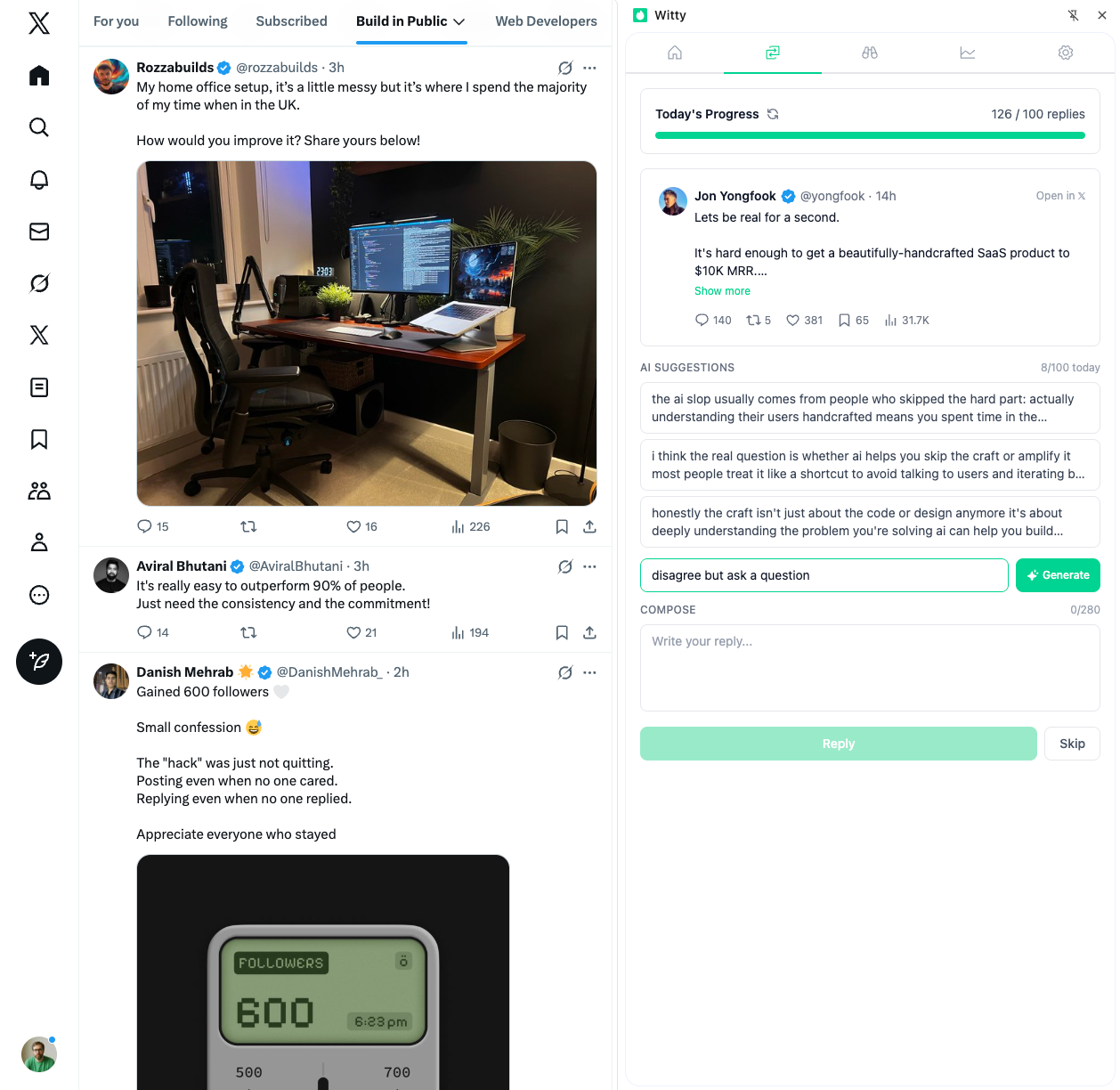
How to Disagree on X Without Becoming 'That Guy'
How to Disagree on X Without Becoming "That Guy"
You know the guy. He's in every thread, well-actually-ing his way through conversations. He mistakes being contrarian for being interesting. His notifications are a wasteland of blocked accounts and muted threads.
Don't be that guy.
But here's the paradox: thoughtful disagreement is one of the most powerful engagement tools on X. Research shows controversial topics increase reply rates by 145%. The algorithm amplifies debate. Dissent stands out in an echo chamber of agreement.
The difference between building your reputation through disagreement and destroying it comes down to how you do it.
Why Disagreement Works (The Algorithm Knows)
A study published in PNAS Nexus found that Twitter's engagement algorithm amplifies emotionally charged content. Toxic tweets receive 27% higher visibility and 86% more retweets. The correlation between controversy and engagement is strong.
Comments on X are up 107% year-over-year. People want conversation, and conversation requires different perspectives.
When you disagree thoughtfully, you create cognitive friction. People stop scrolling when they encounter a perspective that challenges their assumptions. That pause is engagement, and engagement is distribution.
But there's a catch: users don't actually prefer the divisive content the algorithm promotes. They engage with it, but they don't like it. This creates an opportunity,provide the thoughtful, civil disagreement people want to see but rarely find.
The Hierarchy of Disagreement
Paul Graham's famous essay "How to Disagree" outlined seven levels of disagreement, from lowest to highest quality:
DH0: Name-calling. Pure insult. "You're an idiot." Zero credibility.
DH1: Ad Hominem. Attacking the person instead of the argument. "Of course you'd say that, you work in marketing."
DH2: Responding to Tone. Criticizing how something was said rather than what was said. "You don't have to be so aggressive about it."
DH3: Contradiction. Stating the opposite with little evidence. "That's just wrong."
DH4: Counterargument. Contradiction with reasoning. "That's wrong because..." Now we're getting somewhere.
DH5: Refutation. Finding specific points and explaining why they're mistaken. This takes work but builds credibility.
DH6: Refuting the Central Point. Addressing the core argument directly. The most powerful and rarest form.
The bottom four levels are fallacious arguments that damage your reputation. The top three build it. Most disagreement on X lives in DH0-DH3. Moving to DH4-DH6 immediately differentiates you.
The Curiosity Frame
The secret to disagreeing well is approaching it with curiosity instead of certainty.
When tension rises, most people default to defending their point. This triggers the other person's defenses too. The conversation becomes about winning, not understanding.
Curiosity does the opposite. It signals that you're genuinely interested in their reasoning, not just preparing your rebuttal. It lowers the emotional temperature.
Instead of: "You're wrong. The data shows..."
Try: "Interesting take. I've seen different data suggesting the opposite,what's informing your perspective?"
Instead of: "That's not how it works."
Try: "Help me understand,in your experience, how does this play out?"
Instead of: "You should have..."
Try: "One thing we could explore together is..."
This is the Columbo tactic, named after the TV detective. Begin with questions rather than statements. Let your questions guide the other person to examine their own logic. Build your case through their answers, not through attacks.
The "Yes, And" Approach
The "Yes, And" rule comes from improv comedy. Accept what the other person has stated ("yes") and build on it ("and"). Even when disagreeing.
"No, But" Response: "No, that's wrong. The data actually shows..."
"Yes, And" Response: "Yes, I see where you're coming from, and I've found some additional data that adds another dimension..."
The psychological impact is real. When every response starts with "no" or "but," people become discouraged or defensive. They stop listening and start preparing their counterattack.
"Yes, And" doesn't mean you agree. It means you acknowledge before you challenge. You validate their thought process while introducing your perspective. The conversation continues instead of collapsing into debate.
Avoiding the Pile-On
A pile-on happens when one person's criticism invites a mass attack. Someone with many followers quote-tweets a target with disparaging commentary, painting a bullseye on their account. Even if the criticism is valid, the mob effect is ugly.
Before adding your voice to a contentious thread:
Check the thread first. If dozens of people are already attacking, your voice adds harm, not value. The point has been made. Your contribution is redundant at best, cruel at worst.
Avoid quote-tweeting with criticism. This is the primary mechanism for pile-ons. Reply directly if you have something to add. It's less visible and more conversational.
Ask yourself: what's my goal? If it's to feel superior, get likes from an angry mob, or dunk on someone for your audience's entertainment, walk away. That's performance, not conversation.
Remember the human. The person being criticized will see every notification. Even when someone is wrong, they're a real person who will feel the weight of mass criticism.
Research shows that authors in threads with toxic replies are more likely to reply toxically themselves. Toxicity spreads. Don't contribute to the spiral.
When to Walk Away
Not every disagreement is worth having. Some conversations are designed to provoke, not illuminate.
Red flags to walk away from:
- The other person is threatening or personally attacking you
- They're giving ultimatums or arguing in bad faith
- You've made your point and they're not engaging with it
- You notice increased stress, irritability, or emotional reactivity in yourself
- The argument has devolved to DH0-DH2 territory
The "Even If I Win" test: Will winning this argument be worth the emotional cost? Even when you feel you've "won" an online argument, the agitation often lingers. Time spent arguing is time not spent creating.
Online arguments differ from in-person ones because they strip away physical cues. Everything is public and potentially permanent. Screenshots last forever. The stakes are different.
Set a limit before engaging. One or two exchanges to make your point. If it's not landing, that's information,not an invitation to keep pushing.
Building Reputation Through Thoughtful Debate
When you become known for civil, substantive disagreement, you become a go-to voice for nuanced analysis in your niche.
Be authentic. People trust thought leaders who come across as genuine. Performative disagreement for engagement reads as fake.
Be consistent. Thought leadership isn't built in a day. Show up with quality responses regularly.
Connect with other voices. Engaging respectfully with established accounts enhances your credibility, especially when you're pushing back on a popular take.
Focus on the argument, not the person. Refute the central point. Provide evidence. Share your experience. Let the strength of your reasoning carry the weight. (See what makes a high-value reply.)
Admit when you're wrong. Nothing builds credibility faster than publicly acknowledging when someone has changed your mind. It shows you're in the conversation to learn, not just to perform.
The Template for Productive Disagreement
When you need to push back, this structure works:
Acknowledgment: "I appreciate you sharing this perspective..."
Common Ground: "I think we both want [shared goal]..."
Curiosity: "I'm curious about [specific point]..."
Your Perspective: "In my experience / From the data I've seen..."
Invitation: "What are your thoughts on...?"
This isn't weak. It's strategic. You're making your point while keeping the door open for dialogue. The invitation at the end prevents the exchange from feeling like an attack.
The Long Game
People don't remember who was "right" in Twitter arguments. They remember how you made them feel. They remember whether you argued with substance or snark.
The creators who build lasting influence through disagreement are the ones who treat every exchange as an opportunity to demonstrate their thinking,not to demolish their opponent.
Disagree well, and you attract people who value nuanced conversation. Disagree poorly, and you attract combatants looking for their next fight.
Choose your audience wisely. Choose your battles more wisely still.
Related Articles

How to Use Quote Tweets for Growth Without Being Annoying
Quote tweets are powerful. They're also easy to get wrong. Done well, a quote tweet extends a conversation and reaches your audience with built-in social proof. Done poorly, it looks like you're piggybacking on someone else's work.
7 min read
How to Handle Negative Replies Without Tanking Your Brand
You post something you're proud of. Then the notification comes in, and it's not praise. How you respond in the next few minutes can either strengthen your reputation or damage it. Here's how to handle negative replies without losing your cool.
5 min read
How to Start Conversations That Turn Into Followers
Replies get attention. Conversations get followers. When you can consistently turn replies into back-and-forth exchanges, you're not just getting impressions. You're building relationships that convert.
7 min readYou've done the learning. Now put it into action.
Witty finds tweets worth replying to and helps you craft responses in seconds. Grow your audience without the grind.
No credit card required.