The 80/20 of X Growth: What Actually Moves the Needle
The 80/20 of X Growth: What Actually Moves the Needle
Most people on X are busy doing things that don't matter. They're posting at "optimal times," A/B testing their bio for the third time this week, and obsessing over hashtag strategy. Meanwhile, the accounts that are actually growing are doing fewer things,but the right things.
The Pareto principle applies brutally to X growth. Roughly 20% of activities produce 80% of results. The rest is noise dressed up as strategy.
The Activities That Actually Drive Growth
Let's start with what the data says works, ranked by impact.
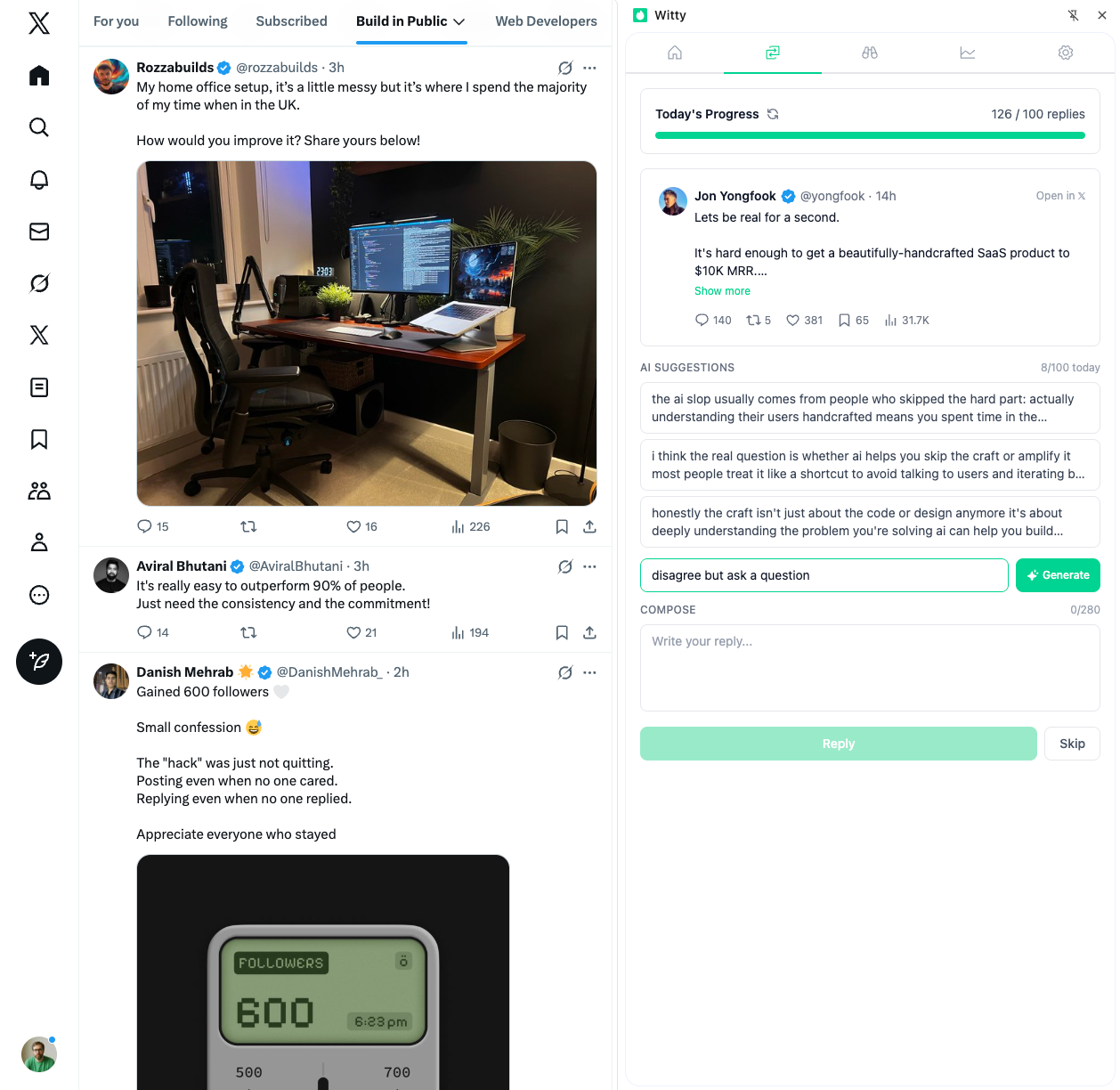
Engagement (especially replies) sits at the top. X's algorithm heavily weights replies over likes—the difference is substantial. When someone replies to your reply, that interaction carries even more algorithmic value. One case study showed engagement jumping from 2% to 6%,and adding 300 followers in a month,just by shifting to a reply-heavy strategy.
This isn't intuitive. Most people think growth comes from posting. But at zero followers, posting is like performing to an empty room. The audience isn't there yet. Replies let you borrow someone else's audience until you've built your own.
Threads come second. Buffer's research found threads get 63% more impressions and 54% more engagement than single tweets. They give you more room to develop an idea, show personality, and keep people reading. One thread per week, done well, outperforms five forgettable single tweets.
Video has a 10x engagement advantage over text-only posts. Short vertical videos (15-60 seconds) with captions perform best. Not everyone wants to make video content, but if you're comfortable with it, this is high-leverage.
Timing matters, but less than you think. Yes, Tuesday-Thursday between 9am-3pm tends to perform best. But the bigger factor is being active in the 30 minutes after you post. Tweets that get early engagement get more distribution. The algorithm waits to see if anyone cares before deciding to show your content to more people.
What Wastes Your Time
For every high-leverage activity, there are several that feel productive but aren't.
Posting without engaging is the most common mistake. You can publish five polished tweets a day, but without replies and conversations, they disappear into the void. At low follower counts, invert your time: 80% engaging, 20% posting.
External links in the main tweet get penalized. The data shows 30-50% reduced reach. If you need to share a link, put it in the first reply instead. The algorithm wants people to stay on platform.
Hashtag stuffing hurts more than it helps. One or two relevant hashtags give a 21% engagement lift. Three or more makes your tweet look spammy and reduces reach.
Follow-for-follow tactics build an audience of people who don't care about your content. They tank your engagement rate, which hurts your algorithm standing. Mass following worked in 2016. It doesn't work now.
Buying followers or engagement is a fast way to destroy your account. Purchased followers are bots or inactive accounts. Your engagement rate craters, and the algorithm stops showing your content to real people.
The Minimum Viable Strategy
If you have 30 minutes a day, here's how to spend it:
Spend 10 minutes on replies. Find three tweets from bigger accounts in your niche and leave thoughtful replies—not "great post!" but something that adds a perspective, asks a question, or shares a relevant experience. This builds visibility faster than posting.
Spend 10 minutes on your own content. One post per day is enough when you're starting. Make it specific and useful. Vague observations get ignored.
Spend 10 minutes responding to any engagement on your content. When someone replies to you, reply back. This triggers the algorithm's conversation signals and builds relationships that turn into repeat engagement.
That's it. If you do this consistently for 90 days, you'll likely hit 1,000 followers. Most people fail not because the strategy is wrong, but because they're inconsistent or they're doing ten things at 10% effort instead of three things at 100%.
The Expert Pattern
The creators who grow fastest share a common approach: they test relentlessly and double down on winners.
Dan Koe describes testing ideas on X before expanding them into longer content: you can publish 50 tweets in the time it takes to make one video. See what resonates, then invest more effort in the winners.
Dickie Bush grew from zero to 225,000 followers in 24 months by publishing small ideas daily, listening to feedback, and expanding what worked into threads.
Justin Welsh creates 15-30 pieces of content per hour using templates derived from his best-performing posts. He doesn't reinvent the wheel,he finds what works and variations of it.
The pattern: publish, observe, double down on winners, ignore the rest.
The Uncomfortable Truth
One analysis found that organic search drives 3x more website traffic than social media. Most people spend more time crafting tweets than writing SEO-optimized articles.
X is powerful for building relationships and credibility. It's less powerful for direct traffic generation. Know what you're optimizing for. If it's brand and network, the time investment makes sense. If it's raw traffic, you might be focusing on the wrong channel.
Start Here
Track where your X time actually goes for a few days. Most people are surprised how much time they spend scrolling versus how little they spend on high-impact activities.
Then simplify. Pick one content format. Pick five accounts to engage with daily. Post once and reply ten times. Do this consistently for 30 days before adding complexity.
The 80/20 rule isn't about working less. It's about ruthlessly eliminating the activities that make you feel productive while producing nothing.
Related Articles

The '15-Minute Daily Loop' for X Growth
30 minutes of focused, strategic activity beats 2 hours of aimless scrolling. This isn't motivational fluff. It's how the math actually works on X. Here's how to make 15 minutes count.
7 min read
New Account on X: A 30-Day Growth Plan
You just created an X account. Now what? Most people start posting immediately, get discouraged, and quit. This 30-day plan breaks down exactly what to focus on each week, with realistic expectations for what success actually looks like.
5 min read
How to Find Your Best-Performing Themes
Random content produces random results. For most creators, 20% of themes drive 80% of engagement. 20% of topics attract 80% of new followers. Your job is finding your 20%. Most people post whatever comes to mind and wonder why growth is inconsistent. Systematic theme analysis changes that.
7 min readYou've done the learning. Now put it into action.
Witty finds tweets worth replying to and helps you craft responses in seconds. Grow your audience without the grind.
No credit card required.