How to Pick Topics That Earn Followers
How to Pick Topics That Earn Followers
Not all content grows your account equally. Some posts get engagement but not follows. Some get reach but not conversion. The topics you choose determine whether your content builds an audience or just generates noise.
Understanding which topics earn followers, and which just earn likes, is the difference between growth that compounds and activity that goes nowhere.
The Topic-Follower Disconnect
You've probably experienced this: a post gets decent engagement, but when you check your follower count, it barely moved. Meanwhile, another post with lower engagement drove a spike in new followers.
What's happening? The topics you choose signal different things to different people. Some content entertains without demonstrating expertise. Some content shows value without giving reason to follow for more.
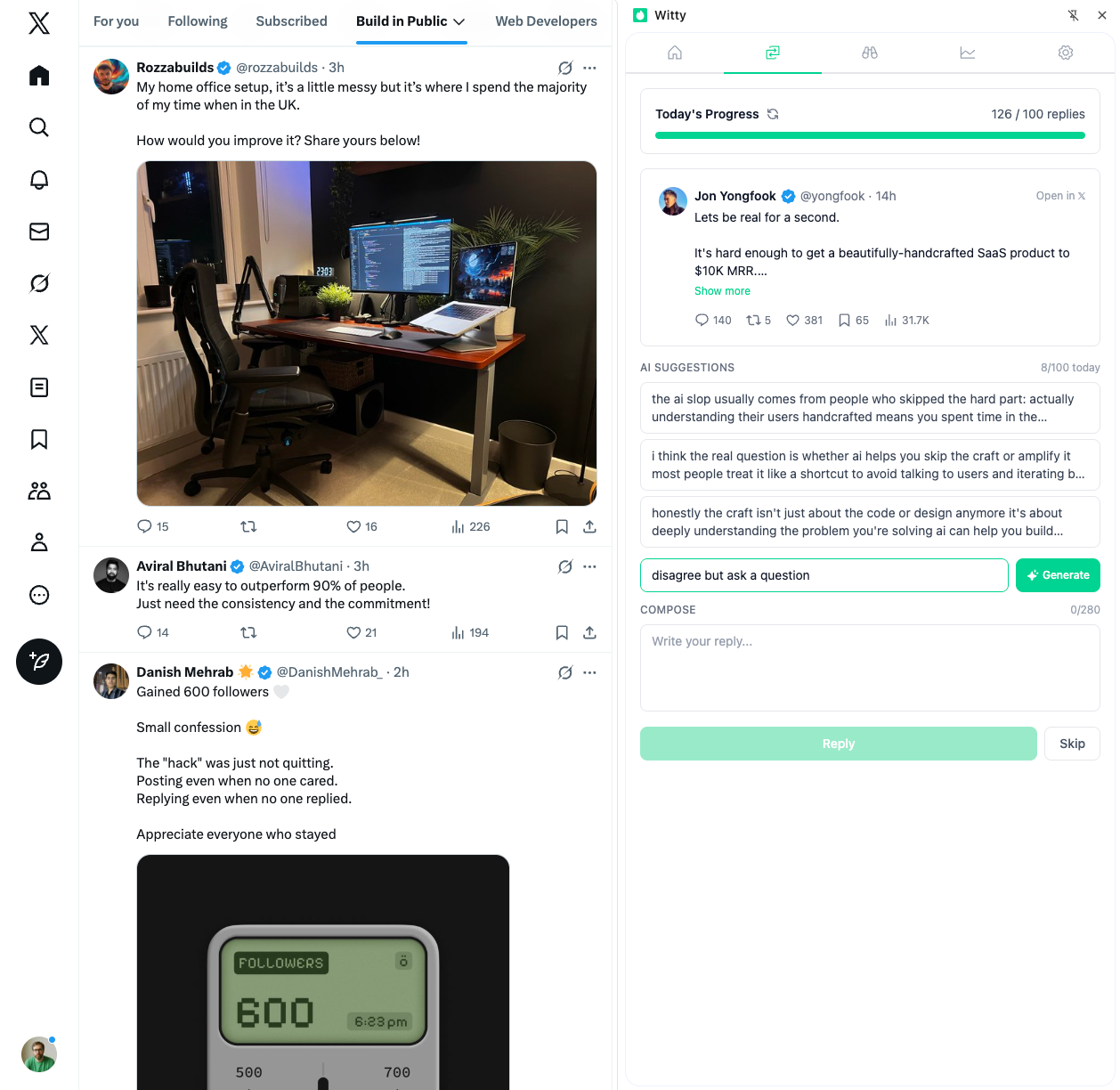
High-converting topics share certain characteristics that make people think: "I need more of this in my feed." Understanding what drives this response also helps you spot tweets worth replying to.
What Makes a Topic Convert
Topics that earn followers share five traits.
First, they offer a clear value proposition. What will someone learn or gain? If the benefit is not obvious, they will not follow for more. The topic must telegraph its utility.
Second, they address a specific audience. "Everyone" is not an audience. Topics that speak to specific people convert those people because they feel directly relevant to their situation.
Third, they promise ongoing relevance. If the topic is complete in one post, there is no reason to follow for more. The topic should suggest a stream of continued insight, a reason to want your future content.
Fourth, they offer a unique angle. If readers can get this content from anyone, why would they follow you specifically? Your perspective or approach must differentiate you.
Fifth, the best converting topics create curiosity about the creator. They make people want to know more about the person behind the content, which naturally leads to a profile visit and follow decision.
The Topic Conversion Hierarchy
High-Conversion Topics
Tactical how-to content: Specific, actionable advice that solves real problems. "How I increased profile visits by 40% with one bio change." This signals expertise and promises more practical value.
Unique experience and insights: Personal journey content and lessons from specific situations. "I analyzed 100 successful X threads. Here's what they had in common." You can't get this from someone who didn't do the analysis.
Frameworks and models: Your systematic approach to problems. "My 3-layer content strategy for X growth." Frameworks signal intellectual value and differentiated thinking.
Substantive contrarian takes: Challenge conventional wisdom with evidence and reasoning. "Why posting more won't grow your X account (and what will)." Shows independent thinking and promises a different perspective.
Medium-Conversion Topics
Industry commentary: Analysis of trends and news interpretation. Shows thought leadership but may not require follow.
Curated insights: Useful collections and synthesis of others' work. Valuable, but curation alone doesn't always build personal following.
Personal stories: Relatable experiences that create connection. Build relationship but may not signal ongoing value.
Low-Conversion Topics
Generic motivational content: "Believe in yourself" adds no unique value. Available everywhere.
Pure entertainment: Memes and jokes may go viral but don't signal expertise. No reason to follow for more.
Broad observations: "Marketing is important" says nothing specific. No differentiation, no reason to follow.
The Topic Test
Before committing to a topic, ask three questions.
First, who specifically wants this? If your answer is "everyone," the topic is too broad. A good answer sounds like "Founders who want to grow on 𝕏 but don't have time for constant posting." Specificity creates relevance.
Second, what do they learn? If you cannot articulate a specific takeaway, the topic lacks value. A good answer sounds like "How to get 3x more profile visits with strategic replies." The benefit should be concrete.
Third, why would they follow for more? If the post is complete in itself, there is no follow incentive. A good answer sounds like "This is one tactic in my reply strategy, and I share these regularly." The content must suggest more value to come.
A topic that passes all three tests is a high-conversion candidate.
Finding Your High-Converting Topics
Method 1: Analyze Your Own Data
Review your past posts, but look beyond engagement. Track which topics led to profile visit spikes, follower increases, and comments asking how to learn more about the subject. If your profile visits are low, the topic-follower connection may be your issue. Engagement does not always correlate with follows. A post with 500 likes might add zero followers while a post with 200 likes adds 15. The metrics that matter are the ones tied to growth, not just interaction.
Method 2: Study Your Audience
Ask direct questions. Pose queries like "What's your biggest challenge with [your expertise area]?" or "What would you want me to write about?" and use polls with topic options to gather data.
DM conversations offer even richer insight. Ask engaged followers what they value about your content, and note the questions they ask you. These questions reveal unmet needs that your content could fill.
Method 3: Audit Competitors
Study accounts with similar positioning. Observe which topics drive their growth, identify gaps in their coverage, and consider what angle you could uniquely own. The goal is not to copy but to find underserved spaces within your shared territory.
Method 4: The 10X Method
Where do you have 10x more knowledge than the average person? Skills developed over years, experiences others have not had, perspectives from unique positions in your industry or life. These are your high-conversion topics because no one else can create this content.
Topic Positioning
General topics have general competition. The narrower you go, the less competition and higher conversion.
Too broad: "Marketing" Better: "Content marketing" Good: "X content strategy" Great: "Reply-led X growth" Excellent: "Reply-led X growth for B2B founders"
At each level, competition decreases. At the narrowest relevant level, you can become the go-to person.
The "Only You" Test
Your most powerful topics are ones where you can answer: "What content can only I create?"
Consider the insights that come from your specific role, the lessons from your unique journey, the perspectives shaped by your unusual background, and the stories that only you can tell. These topics cannot be commoditized because no one else has your specific experience. When you find content that passes the "only you" test, you have found a topic with zero competition.
Topic Portfolio Balance
Do not put everything into one topic. Build a portfolio instead.
Roughly 60 to 70 percent of your content should cover core expertise topics, the areas where you convert best. Build this around your content pillars for maximum impact. Another 20 to 30 percent can address adjacent topics that offer broader reach and attract variety to your audience. Reserve about 10 percent for personal content that builds connection and makes you relatable as a person rather than just an expert.
This balance lets you go deep where it matters while maintaining enough variety to keep your feed interesting.
Testing New Topics
When exploring a potential new topic, start with a focused trial period. Post 3 to 5 times on the topic over a week or two, tracking engagement, profile visits, and how it felt to create the content.
After the trial, analyze the results. Did engagement beat your average? (See what constitutes good engagement.) Did profile visits spike? Did you enjoy making the content? Is there more to say on the subject? Strong signals across these questions suggest adding the topic to your regular rotation. Mixed signals warrant more testing or an adjusted angle. Weak signals mean you should deprioritize the topic for now.
Test before committing. Do not build a content strategy around topics your audience does not respond to.
Common Topic Mistakes
Chasing trends over expertise: Posting about trending topics you know little about dilutes your positioning. Engage trends only through your expertise lens.
Too generic: "10 productivity tips" has been posted millions of times. "How I write 7 X threads in 2 hours" is yours alone.
No ongoing value: If your topic is a one-time information dump, there's no reason to follow for more.
Ignoring audience signals: Posting what YOU want regardless of what your audience responds to. Balance passion with demand.
Copying leaders directly: The same topics that work for someone with 500K followers won't work for you at 500. Find your angle.
The Bottom Line
Not all content is created equal for growth.
Some topics get likes but not follows. Some get reach but not conversion. Some build real audiences.
Choose topics that serve specific people, demonstrate expertise, promise ongoing value, and can only be delivered by you. That is how topics earn followers. For more on making your content reach the right audience, understand the difference between virality and real growth.
Related Articles

How to Reply to Big Accounts Without Sounding Desperate
There's a particular cringe that comes from watching someone reply desperately to a big account. And yet, replying to larger accounts is one of the most effective growth tactics on X. The problem isn't the strategy. It's the execution.
8 min read
How to Stay Consistent on X With a Full-Time Job
79% of creators have experienced burnout. That number jumps to 83% for those trying to monetize their presence. If you're building an X presence while working a full-time job, here's how to stay consistent without destroying yourself.
7 min read
A/B Testing Your Content on X
Intuition only takes you so far. At some point, you need to know, not guess, what works. X doesn't have built-in testing tools, so you have to design experiments yourself. Test one variable, measure results, let data tell you what to do next. Here's how to do it effectively.
7 min readYou've done the learning. Now put it into action.
Witty finds tweets worth replying to and helps you craft responses in seconds. Grow your audience without the grind.
No credit card required.