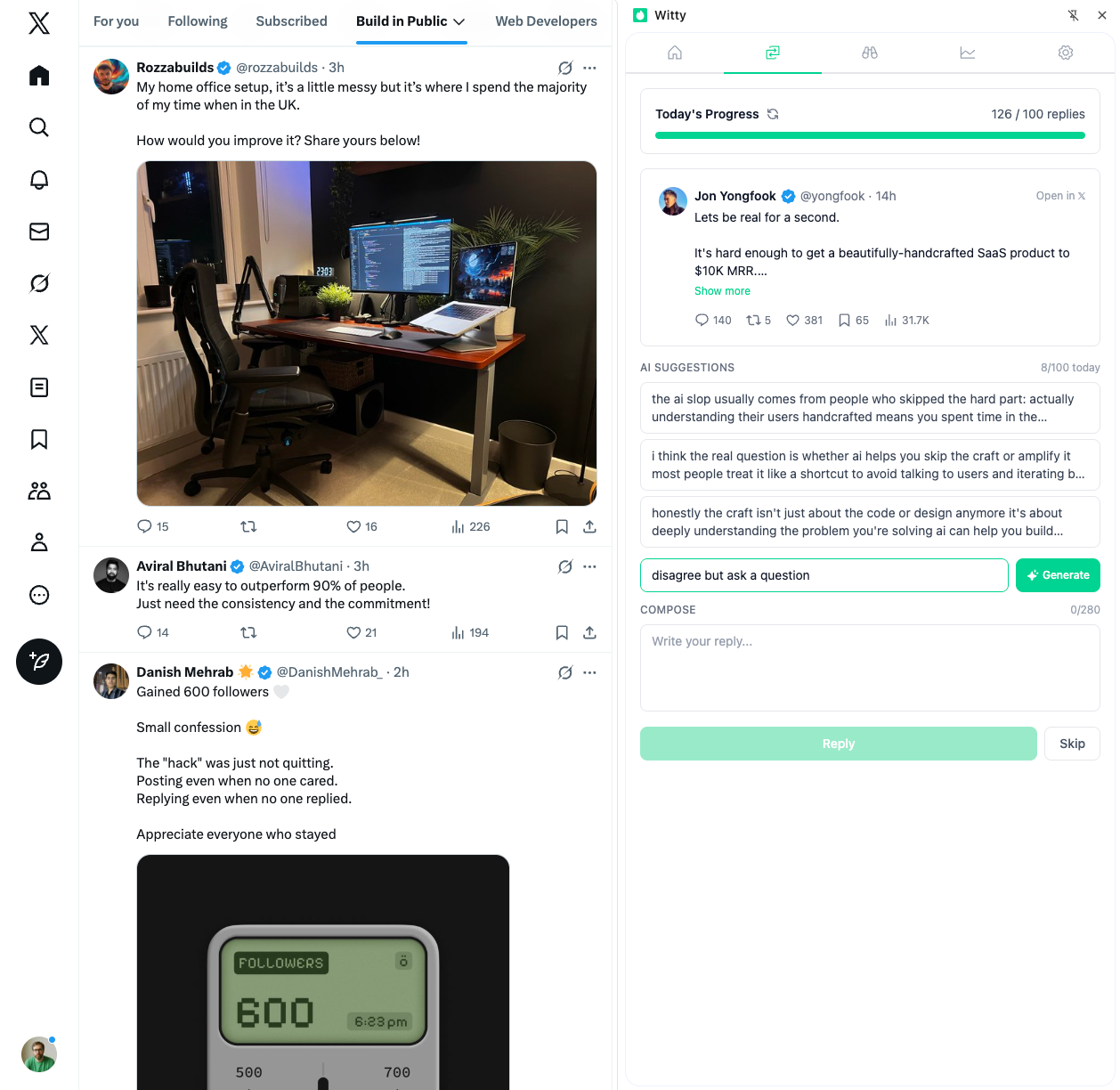
Building in Public on X: What to Share (and What Not To)
Building in Public on X: What to Share (and What Not To)
Building in public has become one of the most effective growth strategies on X,when done right. Share too little and you're just another account. Share too much and you'll overshare yourself into irrelevance or worse.
The trick isn't radical transparency. It's strategic transparency.
Why Building in Public Works
Building in public works because it combines two things people crave: authenticity and education. When you share your journey,the wins, the losses, the lessons,you're creating content that's genuinely unique to you while providing value others can learn from.
The algorithm loves it too. Posts about real experiences tend to generate replies and conversation. People want to share their own experiences, offer advice, or simply cheer you on. That engagement signals to X that your content matters.
But the real magic is relationship building. People root for founders and creators they feel they know. Sharing your journey creates a parasocial bond that transforms casual followers into invested supporters.
What to Share: The High-Value Content
Progress Updates
Numbers and milestones resonate. When you hit $10K MRR, when you get your first 1,000 users, when you ship a feature — these are moments worth sharing.
The key is context. Don't just announce numbers; explain what it took to get there, what you learned, or what surprised you. A revenue milestone without context is bragging. A revenue milestone with lessons is content.
Challenges and How You're Solving Them
Everyone faces obstacles. Few share them in real-time. When you share a challenge you're actively working through (a technical hurdle, a customer problem, a tough decision), you create content that's both authentic and suspenseful.
Bonus: Your audience often helps. Sharing challenges publicly can generate advice, introductions, and solutions you wouldn't have found alone.
Lessons Learned
After the fact, crystallize what you learned. "Last month I tried X approach. Here's what happened and what I'd do differently." These posts combine the authenticity of real experience with the value of actionable insight. You can later repurpose these lessons into multiple content formats.
Behind-the-Scenes Process
How you work is often as interesting as what you work on. Your daily routine, your decision-making process, and the tools you use all help people who aspire to build something similar.
Small Wins and Quick Experiments
Not everything has to be a major milestone. "Tested a new pricing page this week. Results so far..." These micro-updates keep your audience engaged between bigger moments.
What Not to Share: The Danger Zones
Sensitive Business Information
Not everything is meant for public consumption. Revenue breakdowns that help competitors, customer details that violate privacy, strategic plans that lose advantage when shared,keep these internal.
The rule: Would sharing this benefit someone in a way that doesn't benefit you? If so, reconsider.
Unprocessed Negative Emotions
Venting about a bad customer, a difficult cofounder, or a frustrating investor might feel cathartic. It rarely plays well publicly.
There's a difference between "Here's a challenge I faced and what I learned" and "I'm so frustrated right now let me tell you about this terrible situation." The first is valuable. The second is often regretted.
Content That Can't Be Undone
Before posting anything sensitive, imagine it being screenshotted and shared widely. Imagine it being read by your customers, investors, employees, or future employers. The internet has a long memory. Build in public, but build wisely.
Premature Celebrations
"We're about to close this huge deal" before the ink is dry. "We're launching tomorrow" before you've actually tested everything. Celebrating too early can backfire spectacularly when things don't go as planned.
The Spectrum of Transparency
Think of transparency as a spectrum, not a switch.
Full privacy: Share nothing about your work. Safe, but you miss the benefits of building in public.
Selective sharing: Share wins and carefully crafted lessons. Safe but can feel performative.
Strategic transparency: Share wins, challenges, and lessons with appropriate boundaries. The sweet spot.
Radical transparency: Share everything including raw numbers, internal discussions, real-time emotions. High risk, occasionally high reward, often regretted.
Most successful build-in-public accounts sit in the strategic transparency zone. They're open about their journey without being reckless.
Finding Your Build-in-Public Voice
What's Your Comfort Zone?
Some people naturally share more than others. There's no right answer. Start where you're comfortable and expand from there.
What Does Your Audience Value?
Your followers will tell you what they want. Pay attention to which posts get engagement. If your behind-the-scenes content gets more engagement than your milestone posts, that's data.
What Serves Your Goals?
Building in public should serve your objectives. If you're trying to attract customers, share content that demonstrates expertise and builds trust. If you're trying to recruit, share culture and team dynamics. Let your goals guide your sharing.
The Practical Framework
Before sharing something publicly, run through five questions. Is this valuable, meaning will someone learn something or feel inspired? Is this safe, meaning could this harm my business, my team, or my relationships? Is this appropriate timing, or should I wait until the outcome is certain? Is this in my voice, meaning does it feel authentic to how I communicate? And will I be okay with this in a year, meaning am I comfortable with this living on the internet forever?
If you answer yes to all five, post it.
Building a Sustainable Habit
Building in public isn't about one viral post. It's about showing up consistently over months and years. That means finding a rhythm you can maintain.
Some founders share daily updates. Others post weekly recaps. Some document in real-time, others reflect afterward. Find what works for your style and schedule.
The accounts that benefit most from building in public are the ones that do it long enough to build a following and long enough to have a body of work people can explore. Consider turning your best journey updates into threads for deeper engagement.
When Things Go Wrong
Every builder faces setbacks. How you handle them publicly defines your build-in-public brand.
Don't disappear. Going silent after publicly shared plans fail looks worse than acknowledging the setback.
Process before posting. Take time to understand what happened before sharing. Rushed posts about failures often age poorly.
Focus on lessons. People don't want to watch you suffer. They want to learn from what happened. Turn setbacks into teaching moments.
Maintain perspective. One failure doesn't define your journey. Neither does one success. Building in public is about the whole story.
The Compounding Effect
The real power of building in public is cumulative. Each post adds to a picture of who you are, what you're building, and why people should pay attention.
After six months, someone can scroll your profile and see a journey. After a year, you have a documented track record. After several years, you have an archive that demonstrates persistence, growth, and expertise.
This compounds into trust. People who watch you build over time develop a relationship with your work. When you launch something, they're already invested.
Build in public strategically. Share what helps, protect what shouldn't be public, and stay consistent. The audience you build will become one of your greatest assets. For guidance on balancing product work with presence, see building an audience while building a product.
Related Articles

How to Build an Audience on X While Building a Product
The common approach: spend 6+ months building in silence, launch to crickets, scramble to build audience while burning runway. The better approach: audience grows while product develops, launch to engaged community waiting for you. Founders who build in public report 3-5x higher launch engagement.
9 min read
A Founder's Guide to Consistency on X
75.5% of content creators experience stress or anxiety from the pressure to post frequently. For founders juggling product development, fundraising, and hiring, that pressure compounds. Here's how to stay consistent without losing your mind or your startup.
7 min read
How to Find Founders and Builders to Engage With
The founder and builder community on X represents one of the highest-value audiences for engagement. These people are actively building, sharing their journeys, and looking for genuine connections. And 78% of entrepreneurs consider networking a deciding factor in their startup's success.
5 min readYou've done the learning. Now put it into action.
Witty finds tweets worth replying to and helps you craft responses in seconds. Grow your audience without the grind.
No credit card required.